Sayalonga, beyond the view
Sayalonga is not a checklist village. Its story sits in a remarkable cemetery, a narrow old centre, Moorish-influenced architecture and cultivated hills shaped by fruit trees, vines and olives. This guide helps you look more closely without pretending that every door is always open.
Small enough to explore slowly.
The historic centre rewards a walk rather than a rushed stop. Its lanes gather around the church and squares, while the cemetery and viewpoints reveal how the village sits between the Mediterranean and the mountains.
- Expect narrow, sloping streets and uneven surfaces in parts of the old centre.
- The municipal tourism map marks public parking and the principal sights.
- Opening and key arrangements can change, so check with the tourism office before relying on indoor access.
Seven details that make Sayalonga specific.
These are not generic white-village attractions: each helps explain Sayalonga’s architecture, landscape or local memory.
- 01
Round Cemetery
The municipality describes this unusually shaped cemetery as one of the Axarquía’s most visited monuments. Its interpretation centre explains the design and origins; access arrangements should be checked first.
- 02
Museo Morisco
A municipal cultural centre with rooms devoted to Moorish heritage, local archaeology, art, poetry and the Día del Níspero. The official page publishes current visitor information.
- 03
Santa Catalina & San Cayetano
The sixteenth-century church has Mudéjar character and an octagonal tower. The small San Cayetano hermitage stands beside its entrance in the historic centre.
- 04
Callejón de la Alcuza
A funnel-shaped passage near Plaza de la Constitución, only 55 centimetres wide at its narrowest point according to the municipality.
- 05
Cemetery viewpoint
Above the cemetery, the viewpoint opens toward Sayalonga, Corumbela, Monte Bentomiz and the Sierras de Almijara and Tejeda.
- 06
Fuente del Cid
An old water source associated with the village’s Arab-period history. The claim that El Cid drank here is a local legend, not presented as verified fact.
- 07
Corumbela minaret
In the municipality’s other settlement, Corumbela, a restored fourteenth-century Mudéjar minaret preserves another layer of the area’s Islamic architectural legacy.
Why Sayalonga calls itself the paradise of the níspero.
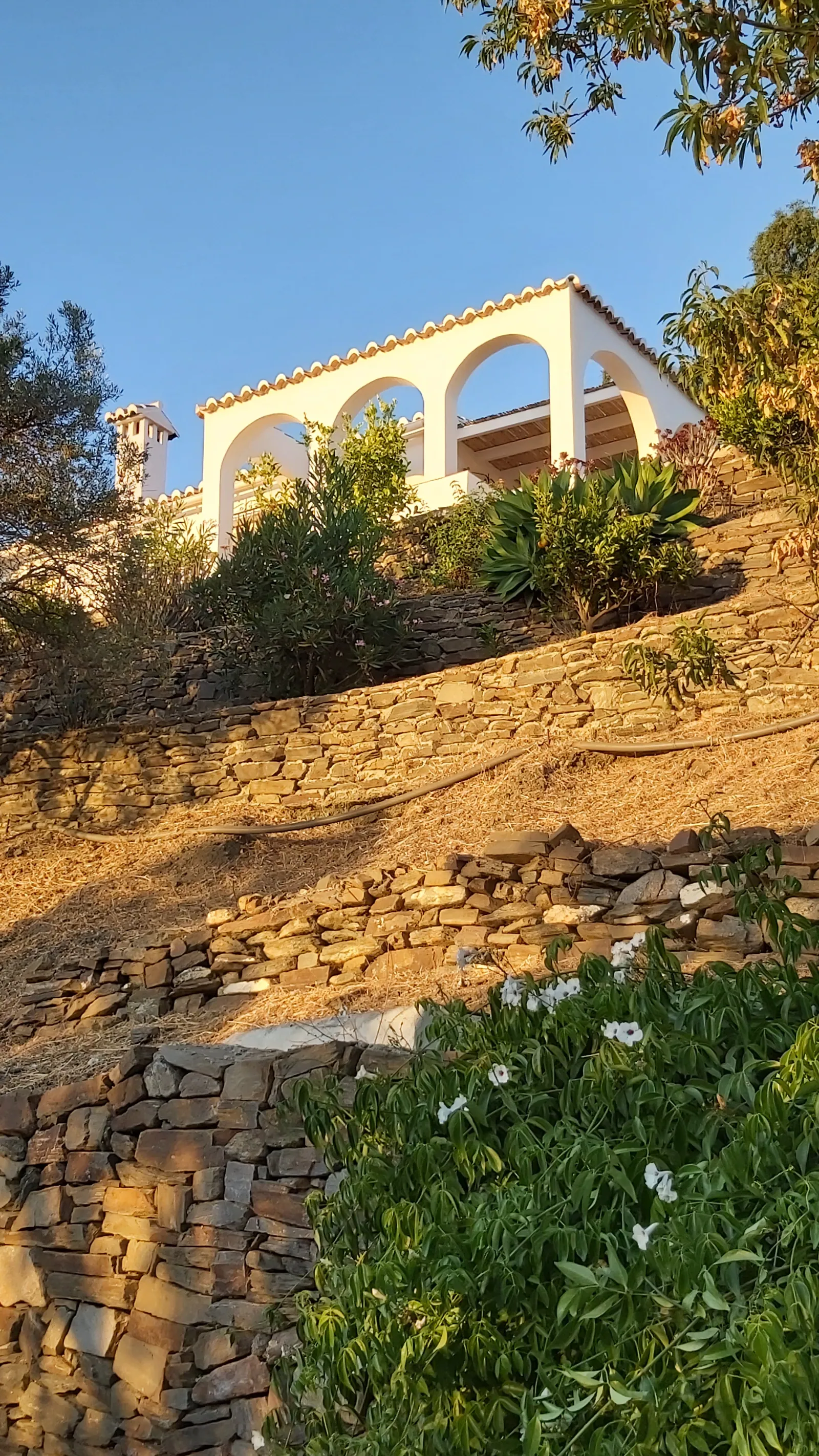
The wider Axarquía combines steep terrain with vines, olives and subtropical crops. Sayalonga foregrounds the níspero—loquat—in its identity, museum and annual cultural programme. Fruit availability and harvest timing vary, so treat the landscape as the lasting story and seasonal produce as a bonus.
Use the viewpoints before choosing a trail.
The municipality publishes a low-difficulty viewpoint route through Sayalonga and Corumbela, estimated at one to two hours. It is a useful introduction to the terrain, but an official difficulty label is not a promise that every visitor will find it easy.
- Check weather, heat and current route information before setting out.
- Wear footwear suited to slopes and uneven surfaces, and carry water.
- Use the municipal map or tourism office rather than improvised directions.
- Leave higher-difficulty countryside routes for a properly researched walking plan.
This is village context, not a live trail report. Detailed walking and nature guidance will be handled separately.
Four expectations worth knowing first.
A little preparation protects the pleasure of discovering a small working village.
Explore the centre on foot
The Museo Morisco’s official guidance recommends parking outside the tight centre and walking in. The municipal map marks parking areas.
Check access before relying on it
The cemetery interpretation centre may require a key from the tourism office, while museum and church access can change. Consult the official pages.
Separate legend from history
The Fuente del Cid is historic; the story of El Cid drinking there is explicitly a village legend.
Respect daily village life
Lanes, squares and religious spaces remain part of local life. Keep noise low, dress appropriately for religious interiors and avoid blocking narrow streets.
A more useful first visit.
What is Sayalonga best known for?
Its unusually shaped Round Cemetery and níspero identity are the clearest signatures. The old centre, Museo Morisco, viewpoints and nearby Corumbela add important context.
Is the Round Cemetery always open?
Do not assume so. The municipality says the interpretation centre may require a key from the tourism office. Check the current arrangement before visiting.
Is the Fuente del Cid story historically proven?
The fountain is an old local water source, but the claim that El Cid drank there is presented by the municipality as a legend.
Can we walk around Sayalonga easily?
The centre is compact, but it includes slopes, narrow passages and uneven surfaces. The municipal viewpoint route is labelled low difficulty, which may not suit every visitor.
Does this guide include directions to Casa Canto de Pajaros?
No. Property-specific driving, arrival and check-in information is sent personally to guests close to arrival.
Let Sayalonga be part of the week, not a rushed detour.
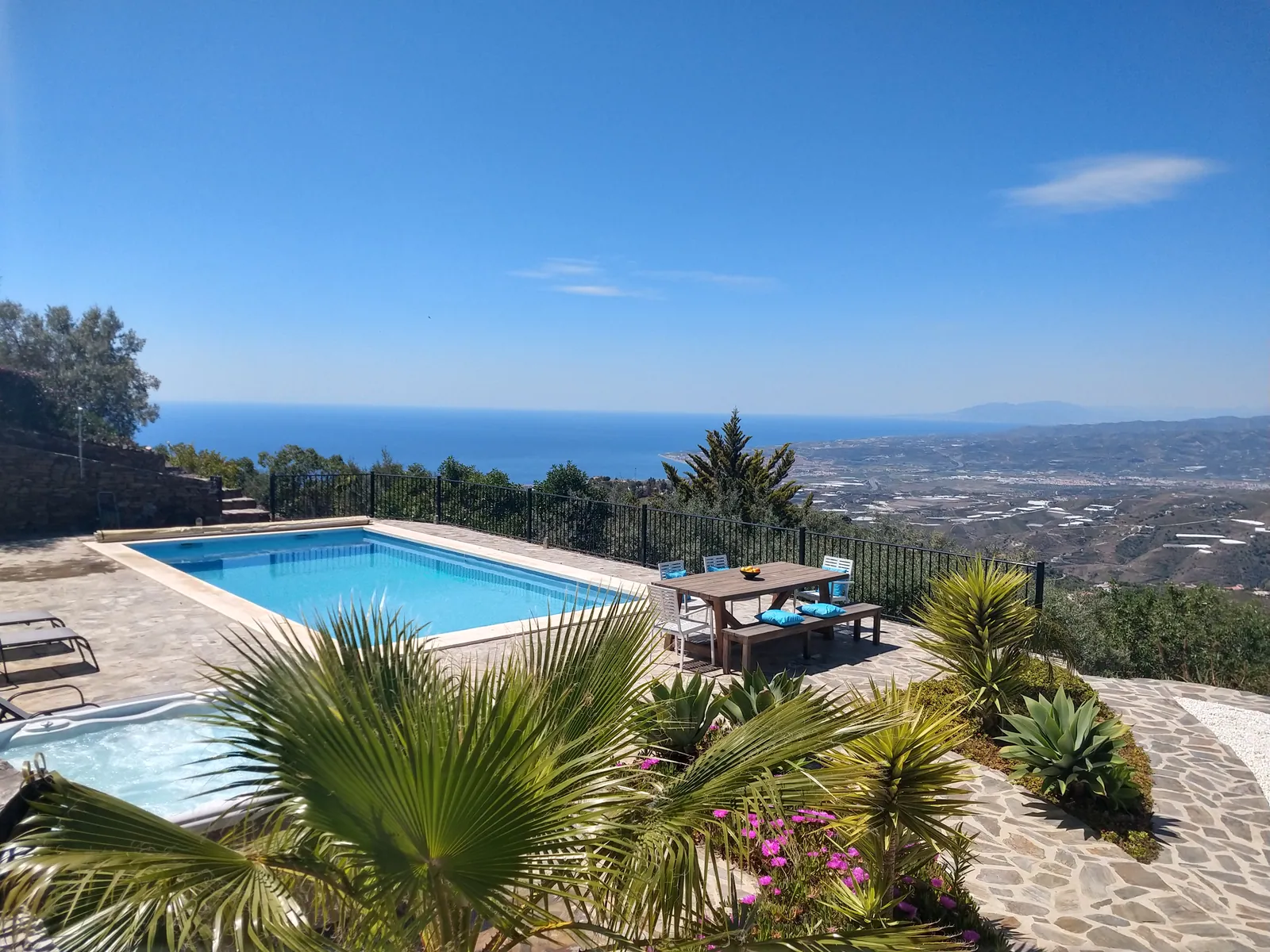
Casa Canto de Pajaros places you in the cultivated hills near Sayalonga. Ask about your dates, then use the village and coast guides to shape the days around them.
Casa Canto de Pajaros
A private two-bedroom villa for up to five guests, with a private pool, jacuzzi and panoramic countryside views.
Ask about Casa Canto de PajarosContinue to the coast
Compare five nearby beaches by shore, atmosphere, services and access rather than relying on one “best beach” claim.
Compare nearby beaches